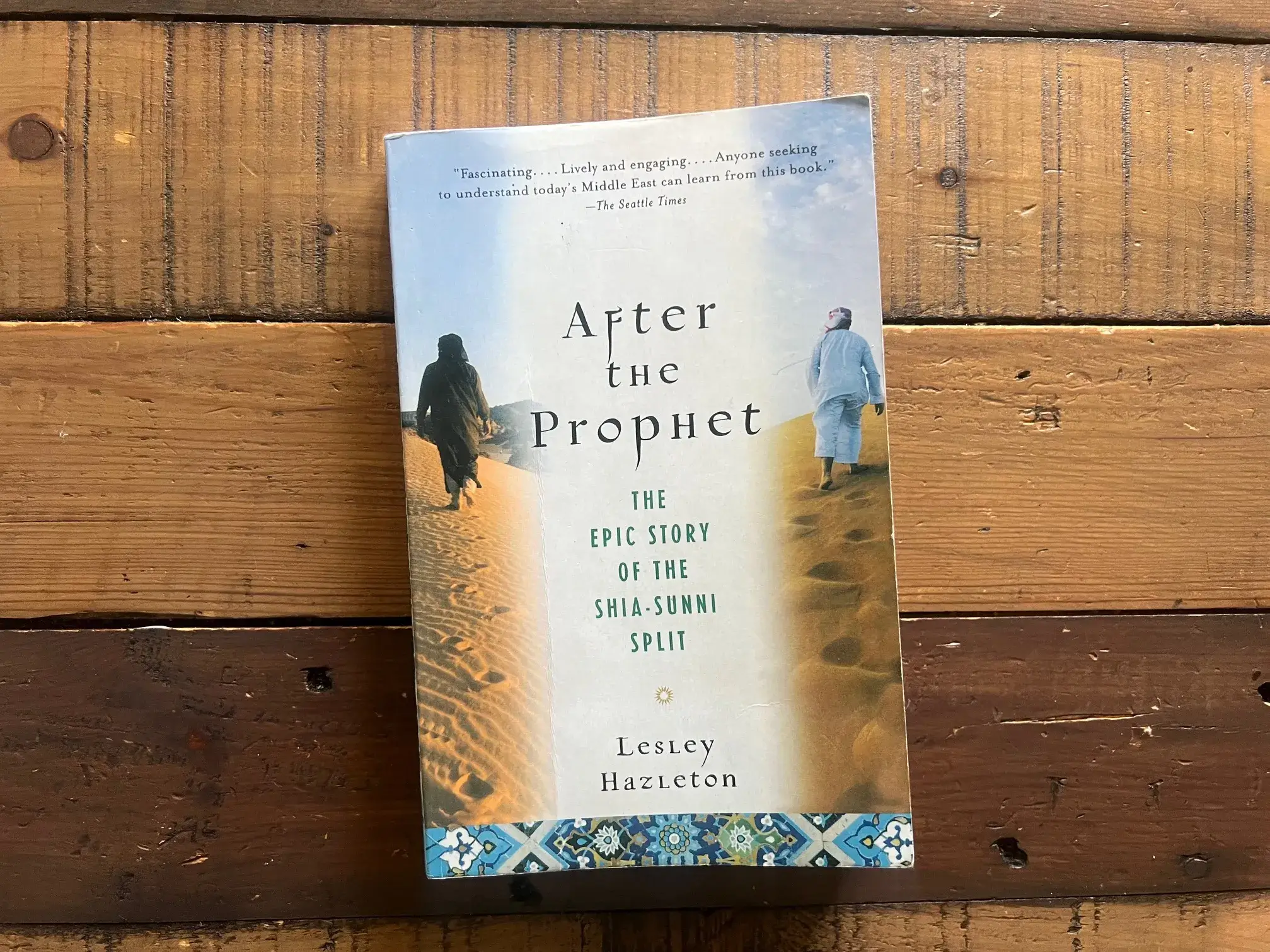
Behind the black/red banners of “Ya Hussain (R.A)” and echoing elegies of Muharram in Pakistan today lies a 1,400+ year-old question. How did the unified brotherhood built by Prophet Muhammad (PBUH) shatter on the burning sands of Karbala into the greatest religious divide of our time?
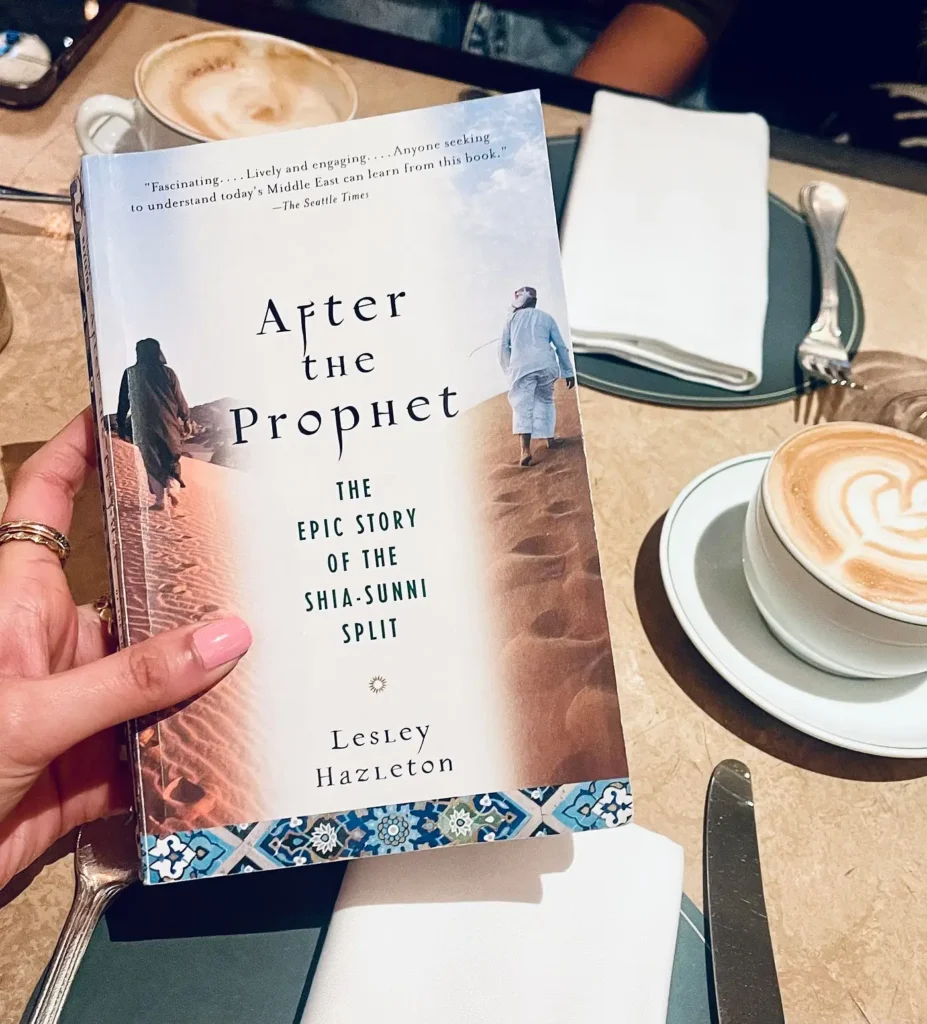
Lesley Hazleton, a writer and a former psychologist, brings a profound understanding of human nature to one of history’s most consequential theological and political divides. Written from her floating houseboat in Seattle, After the Prophet sheds fresh light on the origins of the Shia-Sunni split. By stepping away from purely academic frameworks, Hazleton offers an accessible, fast-paced narrative that illuminates a pivotal era for both lifelong followers and newcomers alike.
A Broken Brotherhood: The Real Reasons Islam Split in Two
Hazleton presents an electrifying account of the defining moment that fractured early Islam. It is a fierce, dynamic confluence of spiritual devotion and ruthless political struggle. Moving at a breakneck speed, the book pulls the reader through a shocking tale of succession crises, betrayal, and shattering ambition that would leave a permanent mark on human history.
We revisit the immediate aftermath of the death of Prophet Muhammad (PBUH)—the exact moment the exquisite vision of a unified Islamic brotherhood first began to fray. What followed was an unraveling that ultimately laid the foundation for the global political rivalries defining our world today.
This book serves as an indispensable key to understanding the centuries-long struggle between Sunni and Shia, tracing its volatile origins back to seventh-century Arabia. Using clear, concise prose that avoids tedious exposition, Hazleton draws vivid portraits of individuals fighting for faith and empire.
Read more: To Infinity and Beyond: A book review
Tears and Thrones: The Rush for Power After a Devastating Loss
The story opens in the holy city of Medina, beside the deathbed of a beloved leader. When Prophet Muhammad (PBUH) passed away without explicitly designating a successor to the state he had built, a bewildering leadership void emerged for the rapidly expanding Muslim community.
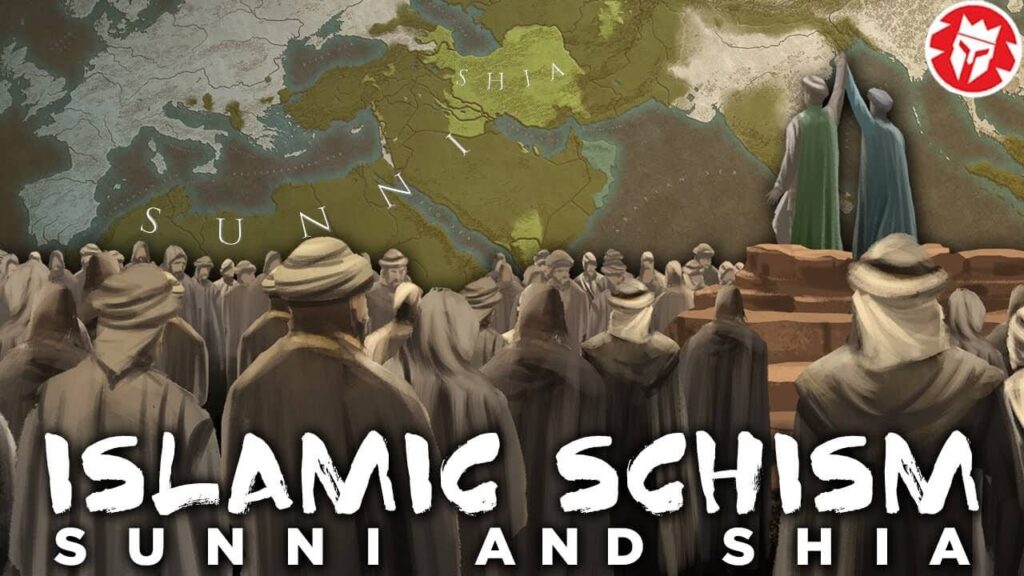
Behind the scenes, immediate companions of the Holy Prophet (PBUH) were already assembling, jockeying to assert a claim on power. A deep ideological fracture formed immediately: some advocated for Hazrat Abu Bakr (R.A.), the pragmatic head of the old guard, while others argued fiercely for Hazrat Ali (R.A.) based on the principle of divine lineage.
As the Holy Prophet (PBUH) still awaited burial, the community politically splintered. Hazleton captures these deeply passionate debates with astounding psychological insight, revealing how early decision-makers—and shifting tribal alliances—shaped fourteen centuries of human history in those chaotic first few days, culminating in the elders selecting Hazrat Abu Bakr (R.A.) as the first Caliph.
Love, Anger, and Flaws: The Real People Behind the Holy Names
Rather than relying on flat archetypes, Hazleton portrays these monumental historical figures as deeply complex humans. It is particularly fascinating how she focuses on Hazrat Aisha (R.A.), the energetic and spirited wife of the Prophet (PBUH). Wielding immense political influence, Aisha (R.A.) fiercely opposes the leadership ambitions of the young Hazrat Ali (R.A.).
Hazrat Ali (R.A.), in turn, is portrayed as a profoundly spiritual individual who prioritizes patience and unity over fast political success. Hazleton breathes life into these figures by exploring their inner thoughts, fiery arguments, and the impossible situations they face. The narrative shines when highlighting the tragedy of former friends becoming political adversaries. Crucially, the book does not try to paint its subjects as mere heroes or villains, but rather as devoted individuals who made devastating mistakes while trying to protect their shared faith.
Unthinkable Heartbreak at Karbala: The Bloodshed That Permanently Divided Us
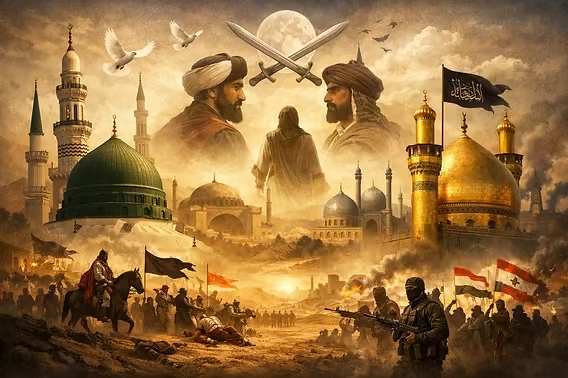
In the third portion of the book, there is an approach towards the bloody desert sands of Karbala, where Hazrat Imam Hussain R.A, the grandson of Hazrat Muhammad PBUH, bravely rises against the wicked ruler, Yazid, in 61 Hijri. He does not wish to accept and endorse the tyrannical and lavish Umayyad dynastic rulers.
Thus, the army of Yazid attacks Hazrat Imam Hussain R.A along with his family members, who are a small group surrounded by the hot desert sand of Karbala. The author narrates this last battle with great passion and heart-touching description.
The tragic martyrdom of Hazrat Imam Hussain R.A becomes a milestone for the permanent creation of distinct Shia theology.
Moreover, this tragic historical incident made the permanent separation between the two sects of Islam. In addition, the author relates this old pain to today’s battles viewed on television. The tears and blood of Karbala create a permanent emotional barrier that theology can never easily mend. This becomes the most tragic episode in the entire history of Muslims.
Read more: 10 Ways the Ego Keeps you Stuck
Heart-Pounding but True: How the Writer Makes Facts Feel Alive
Hazleton uses an active voice style that makes historical events feel fresh and new, just like today’s breaking news. Hazleton has used a simplistic language that helps ordinary people understand the complex foreign terms without difficulty. The pace is very high and goes like a thriller book, not like an academic one.
Besides, Hazleton depends on early trusted historians such as Al-Tabari to ensure that she gives accurate information. All pages give you a lot of context to avoid getting lost among all the names and events mentioned. Transition words help in moving your mind from one historical event to another effortlessly. Short sentences allow you to focus on what is being read without making you tired at all.
Furthermore, the author stays neutral throughout the entire writing process despite the religious sensitivity of the matter. Hazleton respects the beliefs of her subjects but investigates their political matters as well. This perfect blend creates a comfortable space for both outsiders and believers to learn about this topic.
Connecting Past Pain to Present Reality: Why Buy This Masterpiece
There is no doubt that this book must have its space among other books of every history enthusiast across the globe because of the way it destroys some common political misperceptions through factual evidence and humanity. This book will help you understand the modern Middle East much better.
Hazleton creates a connection between the past and the present world with unique skills. This book helps us understand how political agendas can influence the original message of peace. Go and purchase this book right away to join this wonderful historical ride.
Here is the link to the book if you wanna read it: After the Prophet: The Epic Story of the Shia-Sunni Split in Islam
Affiliate disclaimer notice: This review contains affiliate links to Amazon. If you click on one of these links and make a purchase, I may earn a small commission at no extra cost to you. I only recommend books I truly believe add value to your life.