
Did You Know?
Did you know that upcoming space missions will help us know the universe in ways never before? Today’s telescopes can survey billions of galaxies and shed new light on mysteries of dark energy and dark matter. The European Space Agency is sending a mission called Euclid, which will study 1.5+ billion galaxies in its main mission!
Space missions are not only about information collection. They are also about altering human perspectives. They challenge the human mind to look beyond our world, and this has profound implications for human behavior, curiosity, and learning.
Why Future Missions Matter
Now we know that the universe contains more than just stars and planets, but about 95% dark matter and dark energy, things we cannot see. Ordinary matter, like planets and humans, counts for only about 5% of everything. These mysterious components govern how the universe grows and evolves with time. Understanding them can rewrite physics itself. Future missions will fill major gaps in our knowledge. They will answer questions about the universe’s origin, structure, and destiny.
Euclid: Mapping the Dark Universe
One of the big missions is Euclid. This mission will be led by the European Space Agency. Euclid will study dark matter and dark energy by observing the galaxies across a huge part of the sky.
This mission has launched and already sent back early data to Earth. Scientists expect it to collect the most precise measurements about how galaxies spread out. They will then use that data to map how dark energy shaped the universe over time.
Euclid will survey about a third of the sky and observe galaxies near and far. In that way, it will build one of the biggest 3D cosmic maps ever made by humankind.
Because Euclid reaches so far back in time, it shows the universe as it was billions of years ago. When people perceive this data, they frequently feel small and attached to the cosmos at the same time. Such a psychological shift could make us more curious and humble as thinkers.
Nancy Grace Roman Space Telescope: A Deeper Look
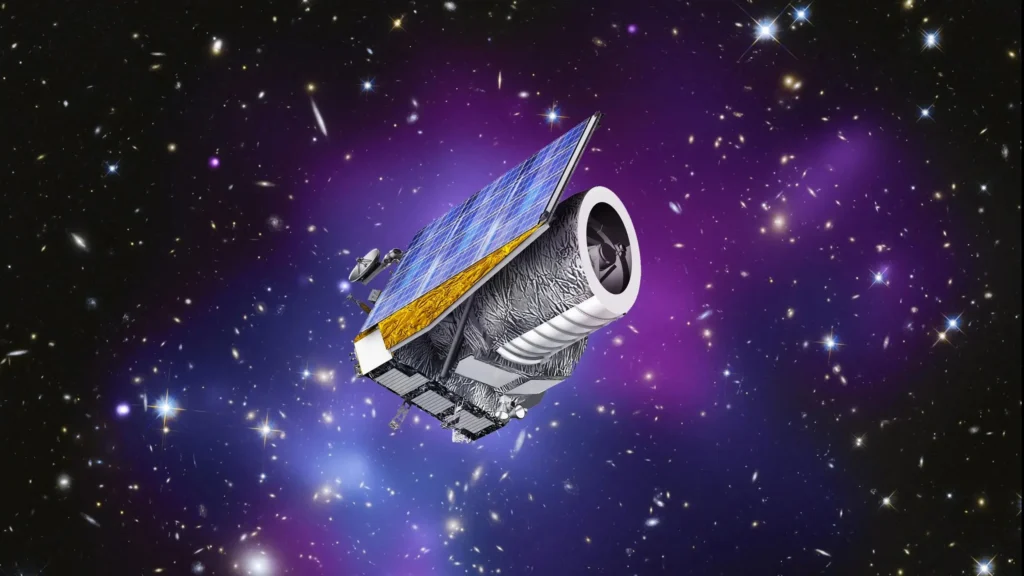
Shortly after Euclid, NASA is planning to launch the Nancy Grace Roman Space Telescope, which will use a powerful camera to peer deep into space. Roman will concentrate on the least luminous galaxies that can only be glimpsed by Euclid. With its wide field of view, scientists hope to learn more about the acceleration of the cosmos and dark energy.
Besides its role in cosmology, this telescope will also be used to look for new planets and study objects within our own galaxy. The data gathered will keep scientists busy for several years, and who knows what kind of “new” discoveries will be made that will revise the textbooks?
How These Missions Affect Human Minds
Why do people care about space? Part of the reason is psychological in nature. If humans can comprehend how vast the universe is, then they can develop an appreciation through wondering, which may cause them to have an interest in science throughout their lives. Their appreciation may also influence the way they look at life on Earth.
Findings also reveal that people often develop open-minded and future planning abilities after studying space. When people view images of deep space, their brains attempt to perform abstract thinking, which leads to enhanced imagination and creativity. Space mission activities inspire children and adults alike to new and exciting dreams and aspirations.
SPHEREx: A Full Sky Survey
Already in space, SPHEREx, or Spectro-Photometer for the History of the Universe, Epoch of Reionization, and Ices Explorer, has made its first complete sky map.
It collected data across 102 different wavelengths of light, which offered scientists a new perspective on the evolution of stars, galaxies, and cosmic materials. Such a mission could provide information on some of the big questions in the universe, such as the formation of the universe and the formation of galaxies. In addition, it would provide information regarding the distribution of vital elements that help in the formation of life.
Human Behavior and Cosmic Perspective
When individuals are shown a detailed map of the cosmos in the world around them, they behave in a predictable way. Individuals feel a sense of relatedness to something larger in the world around them. This helps reduce worries about everyday problems.
Space science also inspires curiosity and critical thinking, competencies linked to higher levels of creativity and cognitive abilities. Additionally, shared discoveries bring people of different cultures together to demonstrate that science can create global connections.

Habitable Worlds Observatory: Searching for Life
This mission is set to take off in the 2040s with the purpose of searching for Earth-like planets beyond our solar system. The Habitable Worlds Observatory will employ powerful telescopes to take pictures of planets circling nearby stars. It will also analyze their atmospheres for any signs of life, such as oxygen or methane.
The mission may also discover probable signs of life. This could change the way humanity sees itself. Humans could look at religion, philosophy, or the universe in a different light. This could potentially be as profound as the Copernican revolution, which gave the universe a Sun-centered perspective as opposed to an Earth-centered perspective.
Read more: Humans Create Limits in an Endless Universe.
Other Proposed Missions and Ideas
Other future missions also hold the potential to revolutionize the study of cosmology. For instance
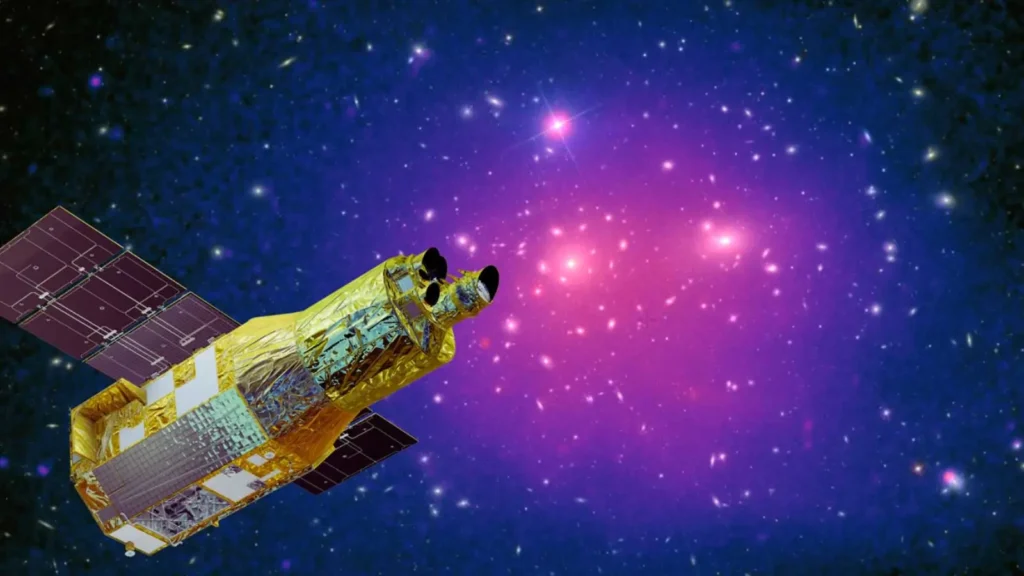
The ESA’s ARRAKIHS mission, planned to be launched by 2030, will seek to uncover the truth about dark matter by observing faint structures within our own galaxy.
THERESE, a concept telescope, could observe gamma-ray bursts to investigate the early universe. Additional probe missions could be selected by NASA for launch in the 2030s. The missions will scan the cosmos using either X-rays or far infrared.
The Power of Collaboration
Space missions do not take place in one country only. Instead, various agencies around the world collaborate. This proves the point that science can bring people together far more than politics can tear them apart.
International collaboration also helps spread curiosity and inspiration around the world. Scientists around the world focus on the same mysteries of the universe. This will ensure that humanity develops into a society of peace, learning, and cooperation.
Read more:Why Dark Matter Remains a Cosmic Mystery
Final Thoughts: A New Golden Age of Discovery
The next two decades will see space missions change the course of cosmology more significantly than ever before in human history. The space missions will include mapping dark matter in space, exploring dark energy, and life beyond Planet Earth.
They will not only change the face of science, but they will also change the way humans think, feel, and interact with other people. They will teach humankind that the universe is indeed quite large, yet quite comprehensible. Most importantly, space exploration teaches us to continue to ask questions. It teaches us to continue to learn. From the mind of a scientist to the mind of a child, these voyages of exploration inspire us to continue to look up and wonder.



Leave a Reply