
Let’s be real for a second: Have you ever spent more time trying to get the perfect lighting for a photo of your “charity coffee” than you did actually drinking the coffee? Or maybe you’ve felt that frantic itch to tweet a hot take on a social issue just to make sure everyone knows you’re on the “right” side?
If you’re nodding, don’t worry—you aren’t a bad person. You’re just a human navigating the complex landscape of virtue signaling psychology.
In a digital world that feels like one giant high school cafeteria, our moral choices have become our social currency. But behind every hashtag and profile frame is a fascinating psychological blueprint. Today, we’re peeling back the curtain on why we signal, why it’s totally normal, and when it starts to mess with our inner peace.
What Exactly is Virtue Signaling?
Before we dive into the deep end, let’s clear the air. Virtue signaling psychology isn’t about being a “fake.” It’s a term used to describe the act of publicly expressing opinions intended to demonstrate your good character or moral correctness.
Think of it as a “moral peacock tail.” You aren’t necessarily doing it to change the world in that specific second; you’re doing it to say, “Hey, I’m a safe, kind, and trustworthy member of this tribe!”
Did You Know?
The term “virtue signaling” actually became mainstream around 2015, but the behavior is as old as humanity itself. Ancient civilizations used public offerings and specific clothing to signal their “virtue” to their communities long before Twitter was a thing!
2. The Science of the “Signal”
Why do we do it? Evolution has a pretty cool answer called costly signaling theory.
Back in the day, if you wanted to prove you were a high-quality partner or a reliable hunter, you had to do something “costly”—like sharing your limited food or defending the camp. In modern times, the “cost” has shifted. Now, we signal our quality by staying informed, using the right terminology, and standing up for values.
The Dopamine Loop of Social Validation
Every time you post something virtuous and the “likes” start rolling in, your brain gets a hit of dopamine. This social validation creates a feedback loop. Your brain thinks, “People like me because I’m good! I should do that again!” This is why it’s so hard to stop—it’s literally wired into your reward system.
Instead of feeding the dopamine loop, practicing intentional silence can help us decouple our self-worth from digital applause.

3. The Quranic Perspective: Sincerity vs. Showing Off
In Islamic psychology, the concept of virtue signaling psychology overlaps significantly with the concept of Riya (acting to be seen by others). The Quran places immense value on the intention (Niyyah) behind an act, emphasizing that the “inner world” is what truly matters to the Creator.
The Quran acknowledges that while public charity can inspire others, the highest form of virtue is that which is done in private to preserve the heart’s purity:
“If you disclose your charitable expenditures, they are good; but if you conceal them and give them to the poor, it is better for you…” (Quran 2:271)
This aligns with the spiritual discipline of Tahajjud, where the act is performed in total isolation, ensuring the intention remains purely for the Divine.
The Danger of the “Performative” Heart
The Quran also warns against those whose actions are purely for the sake of social validation rather than genuine concern for the cause:
“So woe to those who pray – [but] who are heedless of their prayer – those who make show [of their deeds].” (Quran 107:4-6)
This serves as a profound psychological reminder: when the “show” becomes more important than the “act,” the spiritual and mental value of the deed is lost.
4. The Authentic Hadith on Intentions
To understand the weight of our motivations, we look at one of the most famous and foundational sayings in Islamic tradition. The Prophet Muhammad (peace be upon him) said:
“Actions are according to intentions, and everyone will get what he intended.” (Sahih al-Bukhari, Book 1, Hadith 1 & Sahih Muslim, Book 33, Hadith 159)
From a psychological standpoint, this is a masterclass in mindfulness. It asks us to pause and reflect: Why am I posting this? Is it to help the cause, or to be seen as the kind of person who helps the cause? If the intention is purely for the “like,” that is all the reward we will receive.
5. The “Inner” Struggle: Moral Identity
At InnerWorld, we care about what’s happening inside. Everyone has a moral identity—a mental picture of who we are in terms of “goodness.”
When we virtue signal, we are trying to align our outer world with that inner picture. However, there’s a catch. If we spend all our energy signaling that we are kind but never actually act kindly in our private lives, we hit something called Cognitive Dissonance.
“Integrity is doing the right thing, even when no one is watching.” — C.S. Lewis
When the gap between our public signal and our private reality gets too big, we start to feel anxious, fraudulent, and disconnected.
6. Is There a “Dark Side”?
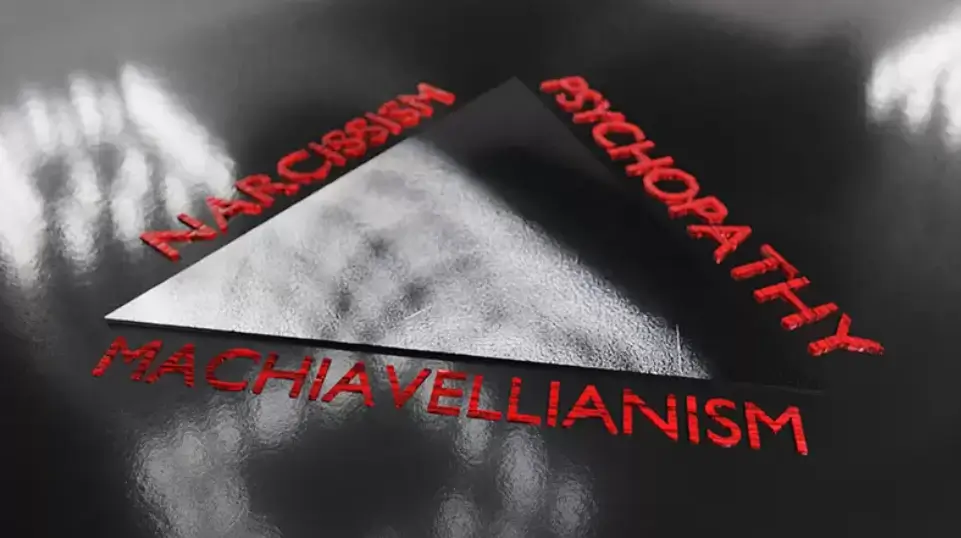
We can’t talk about virtue signaling psychology without mentioning the “Dark Triad.” Research has shown that some individuals with narcissistic tendencies use moral signaling as a “mask.” By being the loudest person in the room about a moral issue, they can deflect criticism of their own behavior.

Did You Know?
Studies show that people who are reminded of their past “good deeds” are actually less likely to donate to charity immediately afterward. Psychologists call this Moral Licensing—we feel like we’ve earned a “pass” to be a bit selfish because we’ve already proven we’re “good.”
7. How to Keep it Authentic (and Save Your Sanity)
So, should we stop posting about things we care about? Absolutely not! Signaling can be a powerful tool for social change. The trick is balance and checking your Ikhlas (sincerity).
When we understand the risks of herd mentality, we see that virtue signaling is often less about ‘being good’ and more about avoiding the social exile of cancel culture.
The “Inner World” Guide to Authentic Virtue:
- The 24-Hour Rule: Before posting a moral take, wait 24 hours. If the passion is still there without the need for immediate validation, post it.
- The Hidden Deed: Borrow a page from the Quranic perspective. Do one act of kindness this week that no one—not even your best friend—knows about.
- Check Your Energy: If you feel a “crash” when a post doesn’t get enough likes, your social validation has become your primary driver. It’s time for a heart-reset.
“The true value of a human being is determined primarily by the measure and the sense in which he has attained liberation from the self.” — Albert Einstein
Conclusion: Your Worth is Not a Trend
At the end of the day, your moral identity is yours alone. It doesn’t belong to your followers, and it isn’t defined by an algorithm. Understanding virtue signaling psychology isn’t about judging ourselves; it’s about becoming more aware of why we do what we do.
When we move from “performing” to “living,” we find a level of peace that no amount of digital applause can provide. So, go ahead—be virtuous. But do it for the world, and do it for your soul—not just for the signal.
Leave a Reply