
Did you know?
Almost 40% of what you do daily is habitual. Most of us engage in habitual behavior without understanding why we behave in certain ways. As a result, the habits we develop significantly influence our day-to-day function and our long-term well-being. Eventually, through repetition of these behaviors, our brain begins to develop neurological pathways for these automatic behaviors, making it significantly more difficult for us to modify them.
How Do You Define Habits? Simply Put
Habits are actions that we perform repeatedly without consciously thinking through the process. Habits are derived from the sheer number of times you repeat each action until your brain is trained to perform these behaviors automatically. As you develop habits, your brain does not need to spend as much time thinking about what to do; instead, it is able to direct its resources toward new and unfamiliar situations.
The Mechanism through Which Your Habitual Behavior Develops
Your brain is always trying to conserve energy. In order to conserve energy, your brain takes repeated actions and converts them to patterns that require little to no thought. Neuroscientific studies have shown that the basal ganglia, a specific region of your brain, store these habitual patterns, as opposed to your conscious decision-making processes. By doing so, your brain can devote more time to new and difficult tasks and less time to deciding on a course of action in response to repeated scenarios.
How Habits are Explained Using the Model of Habit Loops
Habit loops consist of: cue, routine/behavior, reward. Habits form a very solid relationship through cue-routine-reward.
How Habits Can Seem So Powerful
When we have a habit, they usually work outside of our conscious awareness, and when we activate it, they act very quickly and automatically. Therefore, when we have created good or bad habits, many times we may act upon our habits before we think about them (automatic behaviours). The human mind prefers to have a habitual routine rather than consider every decision as a new and complex item.
What Habits Can Teach Us About Human Behaviour
Human behaviour is primarily repetitive in terms of habit and learned behaviours. As humans continue to experience behaviours that are perceived to be “safe” and predictable, these behaviours become repeated over time. Therefore, whereas logic is often used to determine a course of action, habits are often used by humans to dictate their behaviours daily, and therefore can show us the behaviours we tend to exhibit daily.
Good Habits and Bad Habits Psychology
Good habits and bad habits are both subject to the same psychology, and the brain will respond to both in much the same way (both good habits and bad habits will continue to persist as a direct result of a positive reinforcement – reward). Because of this, many unhealthy habits will be repeated by an individual even after experiencing short-term negative consequences. However, a good habit can become a good habit only because a person will continue to have a positive reinforcement and the way the brain processes information related to emotion will strengthen habit formation.
Formation of Habits Through Emotional Triggers:
Habits are formed through Emotion! Stress creates comfort-seeking behaviours; boredom creates mindless behaviours; therefore your emotional state gives you a big cue for how to behave. Thus, human actions derive more from emotions than rational thought.
Read more: Self-Awareness: knowing Your Emotions
Habitual Behaviour Formed by Environment And Environment Influences Habit
The influence of your environment is a key contributing factor in the repetition and formation of the habit. Your environment is constantly sending you signals to which your brain responds. Your environment also usually prompts certain behaviours based on your location. For example, you continue to scroll on your phone, even though you were not looking for anything; scrolling is automatic due to your environment (e.g., phones), not because you wanted to look for something.
The Development of a Person’s Identity Through Their Habits:
Habits develop your view of yourself over time. The reason you feel like your habits reflect who you really are is that you perform your habits repeatedly over time, which solidifies the notion of your identity and how you perceive yourself. Psychologists call these types of behaviours based on the person’s self-perception. Habits that a person performs make up their self-image.
Why It’s Tough to Change Habits
Changing a habit takes mental diligence. The brain resists changes that would interfere with its habitual routines. Therefore, old habits will fight back with a strong force when you attempt to establish a new one. As you engage in repeated behaviour, neural pathways associated with that behaviour become more and more entrenched. PSYCHOLOGY explains the resistance to habit change as “behavioural inertia”.
The Importance of Being Mindful
Developing an awareness of your habits is the first step toward habit change. When an individual becomes aware of their habitual behaviours, it weakens the automaticity of these behaviours. Therefore, being mindful helps to change an individual’s behaviours. PSYCHOLOGY states that having conscious awareness is a means to control automatic behaviours. Awareness disrupts the automatic loop of the majority of one’s habit behaviours.
Incremental Change Builds a Strong Habit
Incremental changes to a behaviour build sustainable habits over time. The “little things” will always feel more comfortable as it is much easier to perform each day; therefore, consistency becomes an automatic behaviour. PSYCHOLOGY recognises that gradual behavioural change strategies lead to the greatest long-term results through small successes.
Replace Old Habits with New Habits Instead of Trying to Eliminate Them
In most cases, once a person develops a habit, they can’t eliminate it. The better approach is to find a replacement for that habit. The result is a more manageable process of developing an alternative habit. Maintain the same cues and rewards, but only change the routine associated with establishing that habit.
Read more: Build Resilience Without Losing Your Heart
Habits Help Make Choices Every Day
Most everyday decisions are habitual.
Most of the time, humans make these decisions unconsciously.
Thus, habits seem automatic.
This is referred to in cognitive psychology as a “cognitive efficiency.”
The human brain is most comfortable with familiar choices.
Social Influences Creating Habits
Social influence can change an individual’s behavior.
People often adopt the habits of their friends and family.
Thus, habits also spread through social networks.
This concept of social learning is a branch of psychology called observational learning.
Humans need a sense of belonging to create social habit patterns.
Effective Ways to Stop a Bad Habit
A lot of patience and planning go into stopping a bad habit.
Identify the trigger that makes you want to engage in a habit.
Understand what you are getting as a reward for doing something that is not good for you.
Choose a better option.
Psychology has proved that using a step-by-step method to break bad habits is supported by evidence from the field.
Creating Healthy Habits for a Lifetime
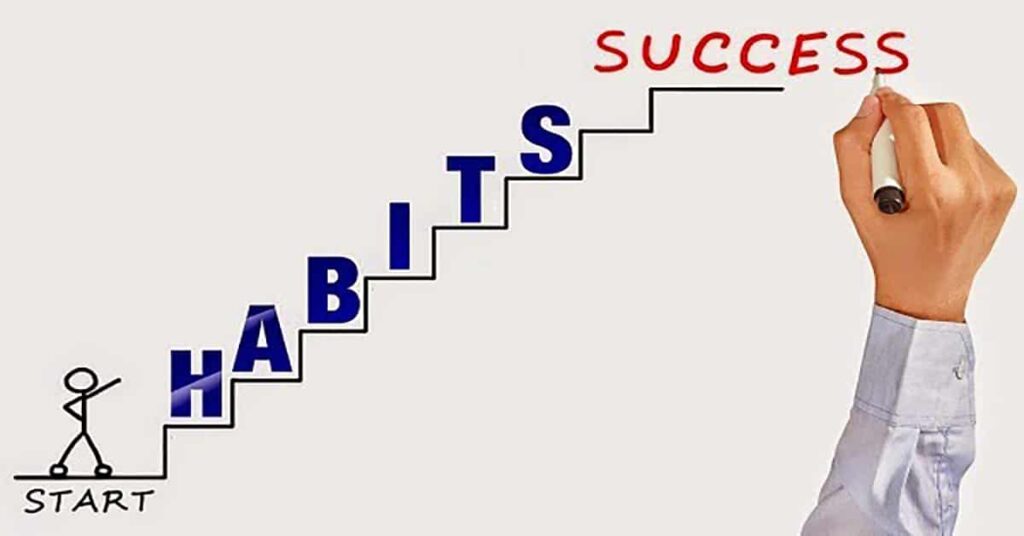
People live healthier lives when they have healthy habits; this improves both their physical and mental health.
Having a consistent, healthy routine helps maintain emotional well-being and stability.
As a result, daily discipline is important.
There is a link between habits and long-term happiness, according to research in Psychology.
Doing small things repeatedly can create a lasting impact on a person’s life.
Conclusion
Habits are unnoticeable forces that control a person’s daily life and the outcomes of that person’s actions.
They have a greater influence on people’s behaviour than their conscious choices.
As a result, understanding how habits work is very important.
Psychology has created effective tools for regulating and controlling habits.
When a person establishes an intentional routine, they will likely create a better quality of life.



Leave a Reply