
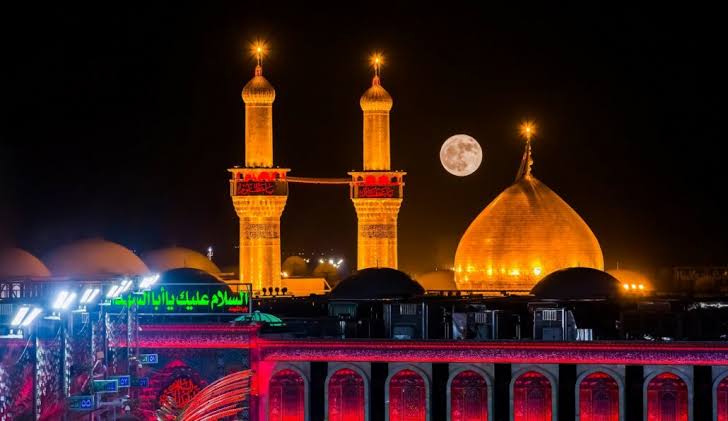
Ever heard of a tale so heart-wrenching that you couldn’t stop your tears? The Islamic month of Muharram unfolds such a heart-wrenching story in Karbala that has left the world in awe for centuries.
Muharram is one of the four (04) holy months that Allah directly commands in the Quran. Millions of Muslims around the globe observe Muharram every year, making it one of history’s biggest recurring spiritual gatherings. Sacred by nature, this historic month radically reframes a Muslim’s perspective of justice, self-sacrifice, and individual worship. Learning about this sacred time unlocks a powerful manual for standing up in the face of injustice.
Entering the Sacred Gates: What is Muharram?
Officially, Muslims look forward to Muharram, the beginning of the Islamic (Hijri) lunar calendar. “Forbidden” is how the word Muharram translates. Allah wanted to give man a sacred break and refuge from ongoing battles and tribal wars. The Islamic Calendar starts on account of the Hijrah from Makkah to Madinah. This is where the Prophet Muhammad took refuge with other followers of Islam to flee oppression. In most cases, they don’t mark the new year with firecrackers at midnight or grand celebratory events.
Pre-Islamic Relevance and the Fast of Ashura
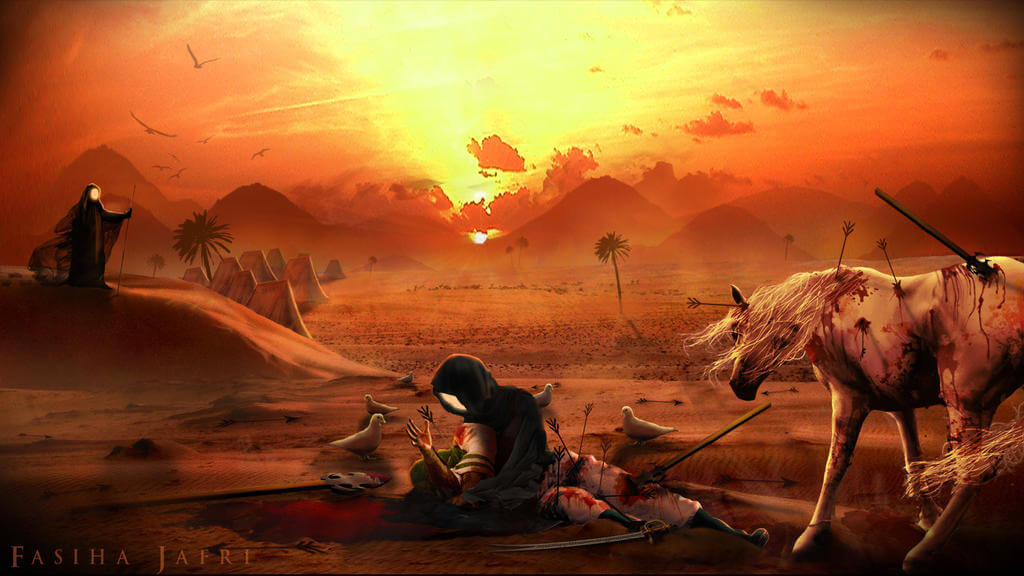
Even prior to the tragic circumstances of Karbala, the tenth of Muharram was very sacred to believers. When Prophet Muhammad (PBUH) was in Madinah, he noticed that the Jewish population was fasting on the tenth day of the Islamic month. They were observing a fast to commemorate how God saved Prophet Moses and the Israelites from the evil Egyptian Pharaoh. Prophet Muhammad (PBUH) had expressed that Muslims had a closer link to Prophet Moses than any other people. Hence, he advised his followers to observe a two-day fast to demonstrate profound spiritual gratitude.
Read more: The Wild World of Virtue Signaling Psychology: Why We Can’t Stop Posting Our Good Deeds
A True Story of Karbala: A Road Divide Haq & Batil
So that you are aware of the most profound significance that the present month embodies, you must turn back to the Islamic year 60 Hijri (AD 680).
The tyrannical ruler Muawiyah has died, and his unjust and impious son Yazid (in power in Damascus), who governs a highly unjust regime violating the foundational principles of the religion, comes to power. Yazid called upon a complete loyalty oath from the beloved Prophet Muhammad’s (PBUH) most cherished grandchild, Hazrat Imam Hussain (A.S), in an attempt to normalize his unjust rule.
Hazrat Imam Hussain (A.S) refuses this oath of absolute loyalty as he simply could not support and have Islam be used as a mere justification for despotism. He says that “one such as I could not be in such a position [of an oath of allegiance]”.
However, Yazidi soldiers, a massive force on the attack, intercept the pilgrims en route to the city of Makkah. Prudently, the Imam took leave of the sanctity of Makkah with his family to help bring about justice in Iraq. With his companions, the elderly, women, and children, he braved the hot desert.
Imam Hussain (A.S) asked for a respite for one more day and night, so that he would be free to read the Holy Quran, meditate, and offer prayer. Ordered to stop them, the tyrant governor, Ubayd Allah ibn Ziyad, sent his strongest captain, Hurr. On the second day of Muharram, the group of Imam Hussain (A.S) finally pitched camp on the dusty plains of Karbala. Hurr (R.A) later on joined the group of Hazrat Imam (R.A) and got martyrdom.
Ten Days of Agony: Shortage of Water & Food
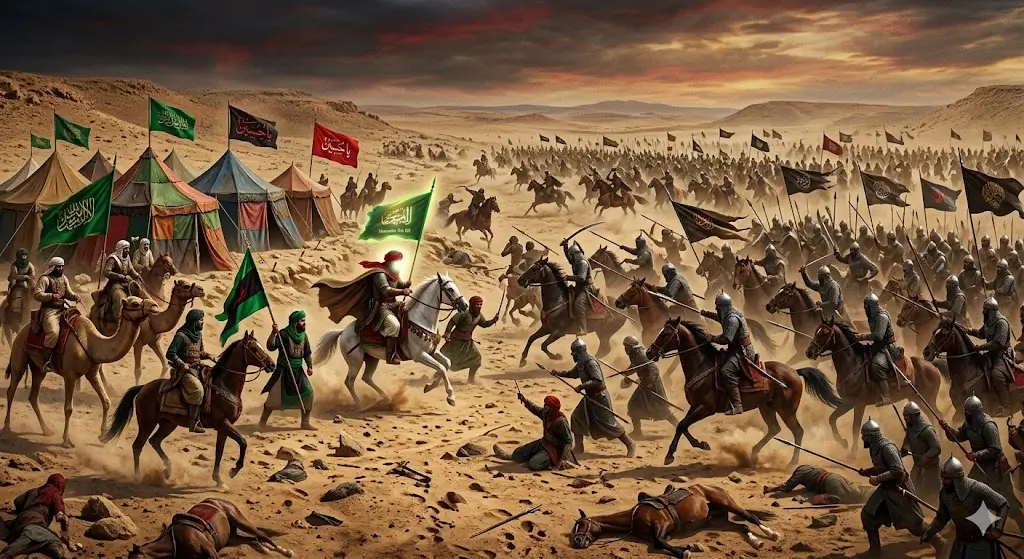
In Karbala, by each passing day, the enemy army swells to over thirty thousand completely armed soldiers. On the seventh day, the army receives a specific directive from Yazid Mal’oon: block the water supply to the camps. As a consequence, the camp of the Ahle Bait is unable to access the Euphrates River nearby to quench the thirst of the tiny children.
Abbas ibn Ali (R.A) was able to secure a few vessels for water during the first few nights. However, by the night of Tasu’a – the ninth night – dehydration was becoming unbearable.
They surrounded the camp and prepared for the worst to ensue the next morning. Imam Hussain (A.S) asked for just one more night of peace, to meditate, pray, and recite the holy Quran.
In that one night, he asked them to leave and blow out the candles – only for every last companion to declare their loyalty and choose to die with him the next morning.
The forenoon of the tenth day of Muharram witnesses a dreadfully unequal, blood-gushing duel fought at arms’ length. Step by step, one by one, the courageous companions of the holy Prophet (P.B.U.H)’s grandson went out to the battlefields. Companions like Habib Ibn Muzahir (A.S) and Zuhair Ibn Qayn (A.S) fought valiantly until they fell as glorious martyrs. The youths of the immediate family of the Prophet also came forward and sacrificed their precious lives.
The teenage Ali Akbar (A.S), the replica of the Prophet (P.B.U.H), falls victim to a spear in the chest. Newly in marriage, Qasim (the son of the second holy Imam) is cut to pieces under the horse’s hoofs. The most touching episode was when Imam Hussain went with a six-month-old, Ali Asghar (A.S). Pleads for his infant from the heart, for even a few drops of water from the stern-faced enemy soldiers.
A brute archer, Hurmula Mal’oon, pierced the neck of the baby (Ali Asghar (A.S)) with a giant arrow with three points.
Read more: The War in Your Brain: 3 Types of Nafs
Martyrdom of the Grandson of the Prophet (P.B.U.H)
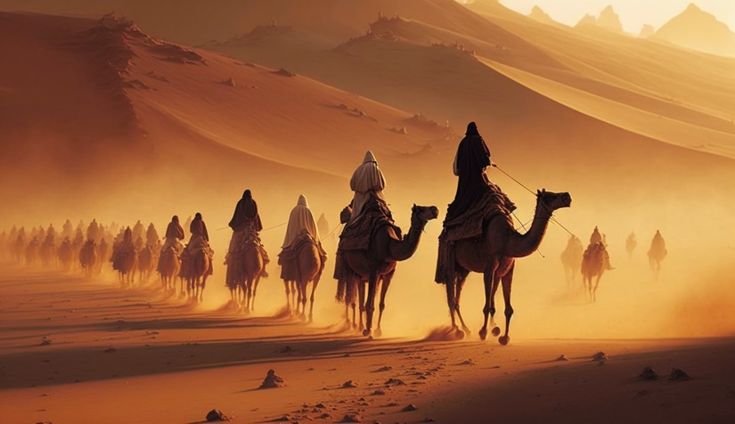
By the end of the day, on the 10th Muharram 61 Hijri, Hazrat Imam Hussain (A.S) was all alone to fight in that desert of Karbala. He has been wounded a thousand times by arrows, swords, spears, etc., in defense of his encampment. Weakened physically almost to death and thirsty for days, he fought with matchless courage against a million and more. While he bowed his head in the final afternoon prayer, a soldier, Shimr Mal’oon, beheaded him.
Inna Lillahi Wa Inna Ilayihi Rajeoon!
The agony didn’t stop here. His holy body was then trampled with horses under the summer sun by the soldiers of Yazid Mal’oon. His tents were set on fire, and women stripped of their veils by these beasts for booty. The heads of martyrs mounted on the ends of lances were displayed by the enemy as a sign of their triumph. The other survivors, including Hazrat Zainab bint e Ali (R.A), were chained down in brutal subjugation and led in a parade towards Kufa, then marched a further distance of hundreds of miles towards Yazid’s capital at Damascus.
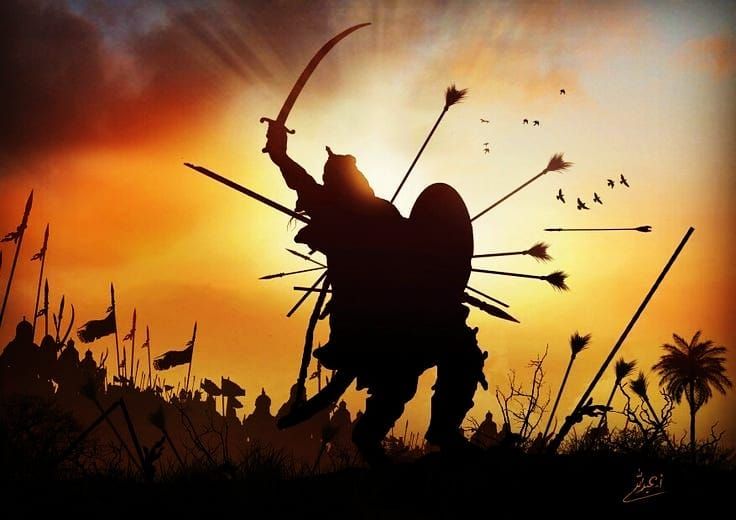
The Brave Tongue of Hazrat Zainab R.A
Historicity is gifted by Karbala to us, not due to the triumph on the battlefield but solely because of Hazrat Zainab R.A, the formidable sister of Imam Hussein (A.S). Her dauntless spirit and commanding speeches, delivered in the dungeons of tyrants, managed to destabilize their entire political structure. Hazrat Zainab R.A, with an indomitable psychological fortitude, exposed the crimes of Yazid and unified the masses against his illegitimate rule.
Hence, she redefined modern female empowerment as, despite suffering untold indignities at the hands of the tyrants, she proclaimed that “In their place I only see beauty.” She rendered a military debacle a timeless worldwide victory for the family of the Prophet (P.B.U.H).
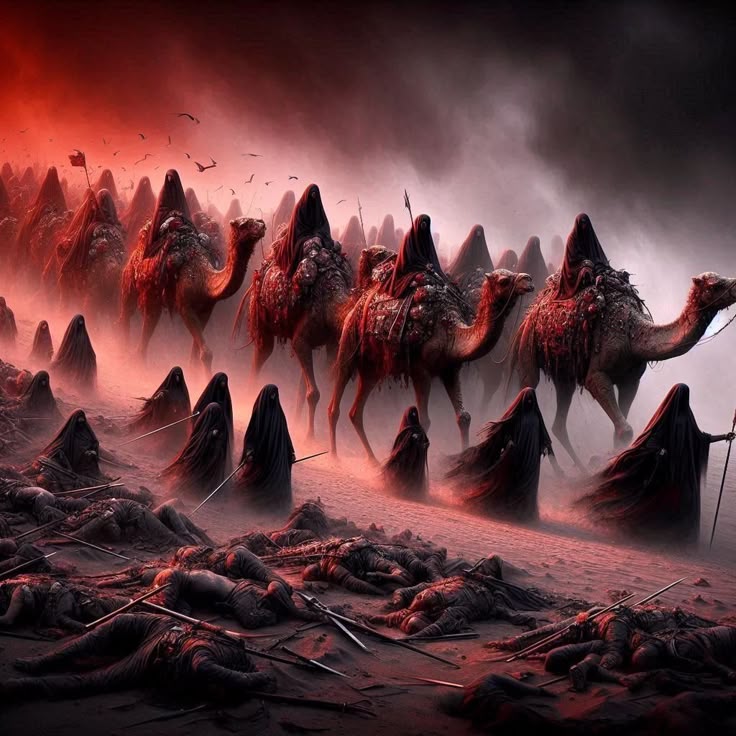
Righteousness Personified – The Message of Ashura
The message of Imam Hussain (A.S) in the Battle of Karbala always transcends time, culture, and belief systems. Imam Hussain’s (A.S) unparalleled courage strongly inspired major global figures like Mahatma Gandhi to stand up to tyrannical forces with just seventy-two devoted supporters. This legendary act proved that the number of supporters does not determine the victory of a righteous cause. So, despite his military triumph, history permanently condemns the tyrant Yazid as a merciless despot, while millions of grateful people continuously cherish the memory of the great martyr of freedom.
How to Observe Muharram?
Being aware of the significance of Muharram should lead you towards actively making positive changes to your life as you strive to draw practical lessons for this important day.
Self-Restraint: This month presents us with a golden opportunity to be more conscious of our anger and take measures to control ourselves. This involves abstaining from trivial disputes and practicing tolerance.
Help the disadvantaged: Extend your help and donations to humanitarian organizations that actively combat extreme levels of global poverty and injustice, just as the great martyr demonstrated.
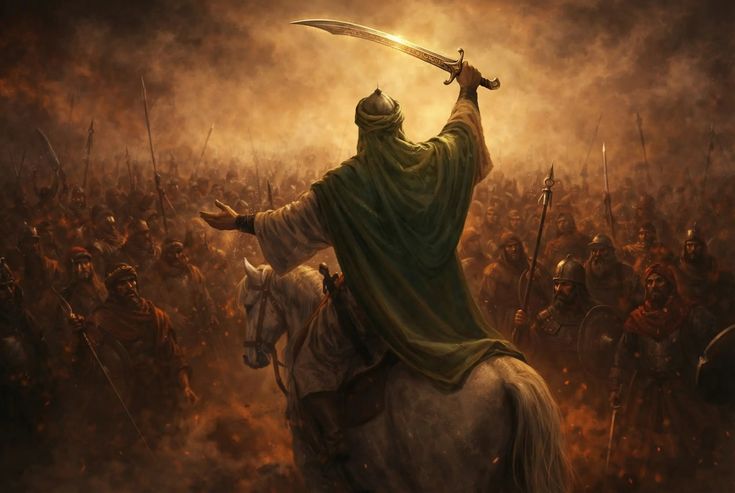
The fasts of the 9th and 10th Muharram
Try to observe them in pursuit of the immense rewards. Get more knowledge. Immerse yourself in beneficial and reliable reading material about the accurate historical narrative and context of the Islamic past. To put it simply, it serves as a yearly spiritual reflection for each individual. The month of Muharram encourages us to have an honest look within ourselves, to understand our motives and ensure we are on the right course in life, thus giving continued expression to the noble essence of Karbala.
The Mental Power of Collective Grief – The Human Psychology
Behavioral psychologists of our era conduct research into this remarkable method of seasonal commemorative activities with a profound fascination. Evidence reveals that joining in communal grieving fortifies social connections amongst us as humans, fostering a society built on intense empathy and prioritizing justice over comfort. Besides this, commemorating past trauma recalibrates our human brains in regard to personal grieving as well as daily obstacles.
When we contemplate the patience of Karbala, the contemporary concerns we carry seem minute. These are mental frames that have helped people develop the highest order of resiliency to confront their current anxieties.
Conclusion
So, this blog provides an insight into the sacred Islamic month of Muharram. It delivers the account of Hazrat Imam Hussain’s ultimate sacrifice at the Battle of Karbala. The tale of Karbala shows the great story of resilience, self-restraint, and bravery, which every Muslim should look up to. Every Muslim should always stay ahead whenever there’s a slight chance of an attack on their religion.



Leave a Reply